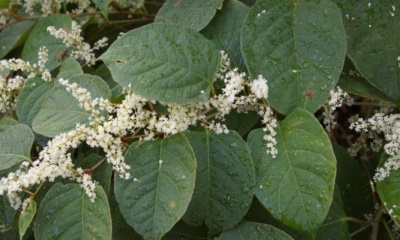
The problem of Japanese Knotweed uncovered
Although rather attractive, Japanese knotweed (Fallopia japonica) is a real thug as it spreads rapidly, growing vigorously from year-to-year (perennial). It is a highly invasive plant which thrives around water sources such as ponds, canals and lakes, as well as along railway embankments and in large open spaces.
In winter the plant dies back beneath ground but by early summer the bamboo-like stems shoot to over 2.1m (7ft), suppressing all other growth. Eradication requires steely determination as it is hard to remove by hand or with chemicals and new legislation now covers its control.
Why is it such a problem?
Japanese knotweed can cause structural damage to homes and other buildings. It pushes through cavity walls and drains, and up through asphalt, cracks in concrete and driveways. It can also cause significant delays and costs to building development.
When the plant invades natural habitats (often through fly-tipping), it out-competes and smothers other plants and animals that usually live there. It clogs up routes used by wildlife and takes up precious space along rivers and around hedges and roadsides. Once it takes hold, Japanese knotweed is extremely difficult to eradicate.
It pays to get a professional survey done. Environet UK recommends contacting a reputable Japanese knotweed removal specialist who will conduct a survey of the affected area. The cost of surveys start from around £240 plus VAT. Make sure the knotweed specialist provides full evidence of their treatment plan, together with an insurance-backed guarantee that covers the work (and any potential further treatment) for a minimum of five years, preferably ten years.
The RICS also has links to professional surveyors with experience in this area, who will give comprehensive inspections – including along and over boundaries.
The best time to survey Japanese knotweed is during the spring and summer months (May to October) when the plant is actively growing. However, an expert should be able to spot it all year round.
Can you get a mortgage on a property with Japanese knotweed?
So long as a qualified surveyor has identified the knotweed, provided a report and a Japanese knotweed management plan (which includes an accurate record of the infestation and how it is to be eradicated) is in place, it is possible to get a mortgage.
Most lenders are happy to lend on a property where Japanese knotweed has been found in the past, so long as there has been a course of treatment and a certain amount of time has lapsed. Much depends on the valuer’s comments and proximity of the knotweed to the property.
If you are planning on selling, you may want to deal with the problem before putting your home on the market.
If you have Japanese knotweed on your property do you have to tell the buyer?
Yes - Environet UK explains that, although it’s not a notifiable weed, when you come to sell a property, you are required to answer a set of pre-contract enquiries. The Law Society’s TA6 form asks sellers: "is the property affected by Japanese knotweed?’ to which you can answer, ‘yes’, ‘no’ or ‘not known’.
If your buyer feels they have been the victim of misrepresentation, they can sue you under the Misrepresentation Act.
If you don't take the necessary action, yes. You could be fined up to £5,000 or be sent to prison for up to two years if you allow contaminated soil or plant material from any waste you transfer into the wild.
It's not illegal to have Japanese knotweed in your garden. But, it is your responsibility control it and prevent it from becoming a problem in your neighbourhood.
You may need to contact someone officially when it comes to getting rid of it too.
The plant was included in the Wildlife and Countryside Act 1981, making it an offence to, "plant or otherwise cause Japanese Knotweed to grow in the wild."
The Government also amended the Anti-social Behaviour, Crime and Policing Act 2014 to include Japanese knotweed. This means it's now possible to get an ASBO if you allow the plant to spread from your land onto your neighbours'.
More information on how to tackle Japanese knotweed:
The Ultimate Japanese Knotweed Guide - actionable tips on how to remove this plant and the cost in doing so
The RHS comprehensive guide: RHS advice
Want to see what is coming up for sale in your area or what price properties have sold for?
You need access to www.eigpropertyauctions.co.uk, the only site with information on virtually every lot coming to auction. Get access to industry knowledge with full visibility of what is coming up for sale and what similar properties have sold for.
Try it for free, call us now to experience your no obligation trial: 01737 226150
Essential Information Group - News and Information
Keep up to date with our latest news, case studies and what's going on in the property auction industry on our blog.

Buying at auction
25/03/2026
The Most Important Document in the Legal Pack? The One That’s Missing.
Legal packs are often treated as the definitive source of truth in a property transaction. But in reality, they are anything but complete. While they provide essential information, they are built to meet minimum requirements - not to offer full transparency. And in many cases, it’s not what’s included that creates risk, but what’s missing.

Buying at auction
24/03/2026
Guide Prices: Why Buyers Should Treat Them as a Guide to the Reserve
Guide prices are one of the most misunderstood elements of the auction process. Too often, buyers treat them as an indication of a property’s value, when in reality they are designed to signal something entirely different, the likely reserve. In an increasingly competitive and dynamic auction market, understanding this distinction is critical to making informed decisions and avoiding costly assumptions.

Buying at auction
23/03/2026
There’s So Much More Than the Aroma of Hot Coffee…
There’s so much more to selling a property than creating the perfect first impression. While details like fresh coffee, open windows, and careful staging can help set the scene, today’s buyers are looking for something far more important - clarity, confidence, and certainty. And that doesn’t come from how a property feels, but from how well it’s prepared behind the scenes.